

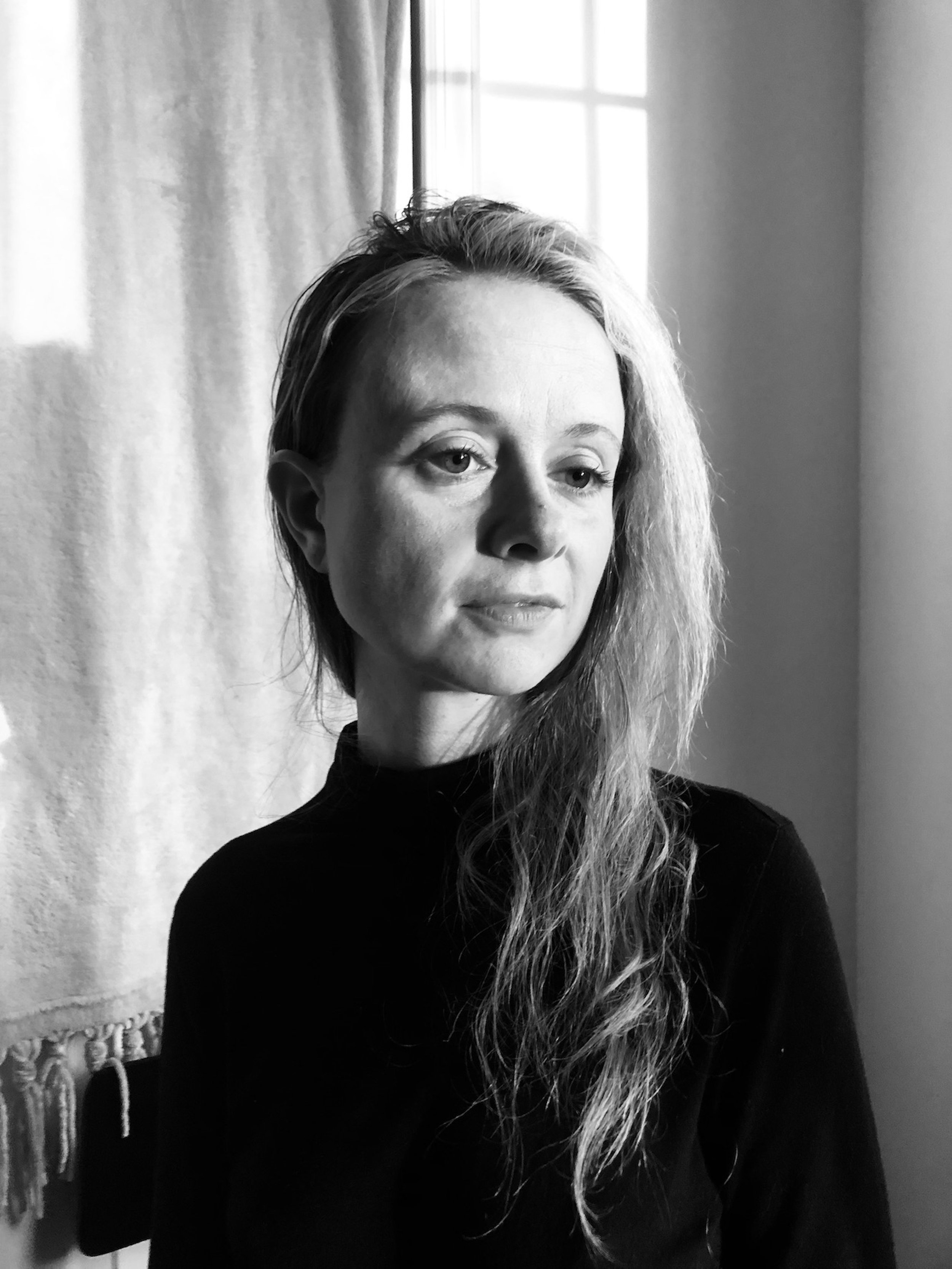
Emmalea Russo is a writer and astrologer. Her books of poetry are G , Wave Archive, Confetti, and Magenta . Recent work has appeared in Artforum, BOMB, Spike Art Magazine, and Los Angeles Review of Books. Her first novel, Vivienne, just published.
Enjoy her discussion with Thrausma lead editor Spyridon-Stefan Kogkas.
The majority of your books are around poetry and now after Confetti with Vivienne you are back with prose-novel writing. Is this a kind of internal conflict for your artistic expression or do you move between these two sides smoothly according to your inspirations?
I heard Michel Houellebecq say that poetry and prose are made from different materials. That seems right. I can’t help but combine them. Vivienne, my forthcoming novel, contains some poetry written by the title character, and my book of poetry Confetti has lots of sections that feel like prose.
Prose and poetry are in intriguing conflict, squaring each other like those pictures of children and dragons wrestling in alchemical manuscripts. In my books, I tend to use all kinds of forms, or they use me: lists, comments, interviews, poetry, indexes, essays. What happens when unlike materials mix? Sometimes things bubble over and convulse. It’s not usually smooth.
Your Art has a certain seal of Cinematic aesthetics and memory. You are so powerful about icons, scenes & messages. How difficult is it to create these “realities”?

I can’t get away from movies. Confetti and Magenta are filled with cinema and alchemy, and links between otherworldly or divine experiences and movies. Horror movies, especially: their shocking light and weird mysticism. I watched a lot of movies (even more than usual) while writing those books. Often, I had films playing in the background, sometimes on loop, either silently or with sound. Images are like containers.
They get stuffed with memories, other images, projections, stories. For me, books begin with images that I can’t shake and I guess the thing becomes to find and explore worlds and words within those images. Other realities, or realities under the realities, emerge. It’s at times terribly difficult, nauseating, awful, thrilling, breezy.
Share with us your drive to write Vivienne and host us to your state of mind during the writing of this book.
I wrote Vivienne in a fevered frenzy last year after scrapping drafts of another novel . That other novel was necessary to get to Vivienne. So in some ways, I’ve been writing it for many years. When I try to summon the process: blankness. Maybe I blacked out. I remember it was cold outside and I wrote the first draft mostly from bed. I felt like an animal.
The editing part got more civilized: in coffee shops in New Jersey and Manhattan, usually upright. I was inspired by the disturbing and visionary work of Hans Bellmer, famous for his doll sculptures and photographs. I began to imagine a fictional woman who lived with him during the end of his life, named Vivienne. The story came to me pretty quickly after I found her image inside my book of poetry, Magenta.

Vivienne revolves around some internet controversy kicked up around Vivienne’s life and work when she re-enters the spotlight, and takes place over the course of a week, showing how the controversy and internet impact Vivienne, who is now in her eighties, and her family. There is poetry in the novel, plus internet comments and text message conversations.
I was thinking about everyday language and the different confusions and revelations that emerge from the seas of words we’re swimming in and scrolling through constantly. So surreal. I also looked at a lot of visual art by Bellmer and other surrealists while writing. The novel is maybe about creation and art, both real and imagined. I took liberties with art history.
Your philosophical, esoteric, and artistic seminars are already a kind of a boutique experience for many people who love the out of the box adventures of spirit. Tell me a few things about the whole response you receive from this experience and how you thought to develop this project.
Teaching classes independently began as a pandemic project. On a whim, I decided to offer one class called Cosmic Edges (which is the name of my newsletter now). The class was all about hidden or ‘quarantined’ spaces in art and astrology. It included slideshows that brought planetary symbols and ancient astrology into conversation with visual art, cinema, and writing. Way more people than I expected attended the class.
This art-astrology combination has always felt rich to me, as art and astrology illuminate each other and go together, and people seemed to dig the material. The planets are moving images. From there, I plunged. I went rogue and continued teaching classes which combine art, philosophy, and the cosmos in some way, or deep-dive into individual thinkers like Georges Bataille or Marguerite Duras or Simone Weil. I’ve met amazing people through these classes.

Have you got certain art movements, philosophers or creators you consider a kind of permanent influence on you?
Here are the ones that spring to mind right now: Christian mystics, surrealism, Cy Twombly, Rita Ackermann and Harmony Korine’s collaboration Shadow Fux, the Wyeth family, Georges Bataille, Antonin Artaud, horror movies from the 1970s. I’m haunted by Hans Bellmer, it seems. Spaces and atmospheres, too: flea markets, the landscapes of the California desert and eastern Pennsylvania.
What are your next plans and future projects?
I’m working on another novel right now, a kind of follow-up to Vivienne. More poetry. More teaching. And now that I have more space, painting. Walking, swimming, staring into space.


