

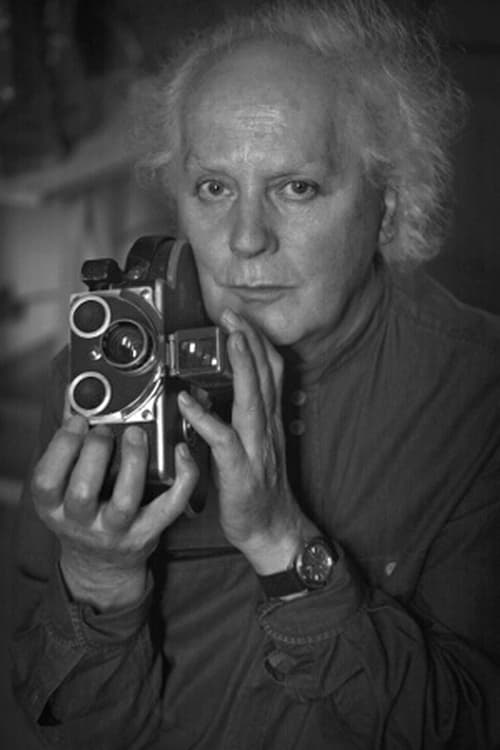
by Marco Senaldi

Paolo Gioli, who passed away at the end of January 2022, is remembered here by Marco Senaldi, delving into the philosophical aspects of his photographic and cinematographic production.
We would like to thank Professor Senaldi for the honour to allow us to work his Italian version of this article that published on https://www.artribune.com/arti-visive/arte-contemporanea/2022/02/ricordo-paolo-gioli-morte/
Our lead editor Spyridon-Stefan Kogkas is the translator from Italian to English. We will be back on Paolo Gioli and his work with an experimental project..Stay tuned!
Thrausma Journal
At the beginning of that authentic modern gospel that was (and in some ways still is) Herman Hesse’s Siddhartha
, the protagonist, after years of exhausting searches for the truth, has a sort of illumination. He looked around as if he were seeing the world for the first time .
The world was beautiful, the world was colorful, rare and mysterious! Here was blue, there yellow, further on green, the sky seemed to flow slowly like rivers, the forest and the mountain stood still, everything was beautiful, everything was enigmatic and magical… All of this, all this yellow and blue, river and forest penetrated for the first time through [his] sight… it was no longer the senseless and accidental multiplicity of the world of appearances…

The meaning and essence of things were not in something beyond and behind them, but in the things themselves, in everything (H. Hesse, Siddhartha [1922], ed. it. Adelphi, Milan, 1975, p. 63, italics mine).
It is not to be underestimated that the hero’s spiritual enlightenment passes through the gaze. And this gaze has something primordial, primordial, inaugural as if it were the first time it rests on the world and fully grasps it.
Now, this passage by Hesse closely recalls that of the philosopher Konrad Fiedler, who in his essay On the Evaluation of Works of Figurative Art , from 1876, goes so far as to say that “What [art] creates is not a second world alongside another that would exist in any case without it, but it produces the world for the first time through and for artistic consciousness” (K. Fiedler, Beurteilung von Werken der bildenden Kunst , in Konrad Fiedler Schriften über Kunst , Piper, Munich 1913, vol. I, p. 52, italics mine; ed. it in Id., Scritti sull’arte figurativa , Aesthetica, Palermo 1999, p. 56).

In both passages it is emphasized that true “artistic consciousness” consists in being able to observe the world as if one were doing it “for the first time”. Yet it cannot be overlooked that Siddharta’s visual epiphany comes second to the long and painful ascetic journey that precedes it. In Fiedler’s own intentions, artistic consciousness must complete a long apprenticeship (“ the long and incessant process of the spirit ” [Fiedler, op. cit ., ed. it., p. 58]) so that it can, in the end, “learn to see” in an original way.
For him too, the artistic world produced and observed “for the first time” comes after that we have managed to get rid of the useless world of appearances, which are precisely “secondary”. Furthermore, Hesse’s book itself, although set in a fabulous India of the past, was published in 1922, that is, in the midst of one of the most splendid seasons of European cinema and artistic avant-gardes.
The irresistible call towards a pure gaze emerges as nostalgia for something that is about to be lost, or perhaps already is. Paradoxically, the extreme solution that modernity has to “save” the innocence of the gaze is precisely that of repeating it through the technical means of reproduction.
PAOLO GIOLI.OPTICS & PERCEPTION
When Paul Cézanne wrote to Emile Bernard in 1905, “ L’optic, se développant chez nous par l’étude nous apprend à voir ” (cit. in M. Cousins, Storia dello sguardo [2017], il Saggiatore, Milan 2018, p. 11) (i.e. “ optics, evolving among us thanks to study, teaches us to see ”), he had exactly this paradox in mind. Between the end of the 19th century and the beginning of the 20th century, in fact, optical research was the order of the day: however, it was not the physical optics of previous centuries, but the psychophysiological optics, inaugurated by Wolfgang Goethe with his studies on the perception of color and the vision of images.

Goethe was the first to understand that, compared to the “direct images” that we see in everyday life, it is precisely the physiological images (produced by the eye in the absence of the object, inside a camera obscura , reflected by a mirror or filtered by a lens) that are endowed with a superior “ideality”. In fact, the latter perform a fundamental task to which the others cannot aspire: they make us aware of the very act of seeing.
And they do so precisely because they are “mediated” by some more or less technical instrument.
Subsequently, the development of this intuition is provided by the exceptional study on optics by Herman von Helmholtz ( Handbuch der physiologischen Optik , Leipzig, Voss, 1867; tr. fr., Optique physiologique , trans. E. Javal, Th. Klein, Paris, Masson, 1867.), which is configured as a science aware of the subjective faculty of “looking” – and it is no coincidence that Helmholtz was the inventor of an instrument for “looking at seeing” (as Marcel Duchamp puts it in a Note of the Green Box, in Duchamp du Signe , Flammarion, Paris 1975, p. 37), namely the ophthalmoscope.
The decisive point here is that optics, far from being a science in conflict with original sensation, is instead its best ally . Helmholtz, in fact, draws from it an authentically materialistic aesthetic in which the study of ocular movement, of the anatomy of the eye, but also of moving images and optical illusions, completely remaps the uncertain field of visual sensations, and it is precisely for this reason that, in the words of Cézanne, “teaches us to see”.
( Helmholtz’s Optics should therefore be understood as the aesthetic palimpsest of the artistic revolution of half a century later; in fact, his Theory of Music [ Die Lehre von den Tonempfindungen als physiologische Grundlage für die Theorie der Musik] had the same effect., Braunscheig, Vieweg, 1863], based on tones and sound sensations, rather than “musical” ones and judged by Egard Varése to be “a revelation”).

All contemporary arts are united precisely by this awareness of the “materiality” of seeing, and, at the same time, by the attempt to offer an aesthetic solution to the paradox whereby the “original” vision comes after (and thanks to) the secondary and mediated one. Whether it is painting, as for Georges Seurat or Paul Cézanne, or photography, as for Hyppolite Bayard or Julia Cameron , or cinema, from Georges Mélies to Man Ray , or “sculpture”, as in the case of the self-propelled works of Marcel Duchamp , or even writing, as for Hesse or Paul Valéry , the effort remains that of a “return” to the primordial sources of the gaze – which, however, in order to rediscover these natural sources, must employ exactly the same artificial device that destroyed them.

Of Diving and Drowning, 1972, video still
THE POETICS OF PAOLO GIOLI
The vast and multifaceted work of Paolo Gioli (Sarzano di Rovigo, 1942 – Lendinara, 2022) could be considered as a whole as a tireless work of elaboration conducted with a plurality of means in the same direction.
Painter, designer, photographer, filmmaker, “total” artist, Gioli has created a huge heritage of images in more than five decades using all possible “analogue” media . Faithful in this to the materialist dictate of the masters of “optics” (from Helmholtz to Maxwell, from Goethe to Land), he has made the most of their research, and in some cases he has wanted to “retrace” it (for example, he has “re-done” Edwin Land’s experiment, that is, obtaining the impression of colour by superimposing two black and white films [ Rouge de Land , 2014]), to learn (and to make us learn) to see.
It is through optics that, according to Gioli, we can “rediscover” the ineffable dimension, the original epiphany of the gaze, which is found “before” any medium materially employed by it (on the intrinsically Neoplatonic dynamics of this “return” to the origin, see Plotinus’ words: “ Those who gaze at works of art with their eyes… are as if shaken by amazement and induced to remember true reality ”, cit. in P. Hadot, Plotinus, or the simplicity of the gaze [1997], Einaudi, 1999, p. 24).
The work of art (whether it is a pinhole Polaroid, a cinematographic film, a silkscreen emulsion, or a charcoal on paper) is, yes, something exquisitely material, physical, almost corporeal; but it is ultimately made possible by the delicate and complex process of perception that anticipates it, and in which it also finds its ultimate end.
His materialism is therefore entirely sui generis and cannot be confused with any immediately ideological commitment.

To understand this, one can compare his most famous film, Pinhole Film ‒ Man Without a Movie Camera (1973-1981-1989) with Dziga Vertov ‘s masterpiece , Man with a Movie Camera(1929) (of which Gioli’s subtitle not by chance sounds like a surprising reversal).
In Vertov’s work, in fact, aesthetic materialism constitutes a precise expressive stance that consists in showing, together with the artistic result (the film shot as such), the work and social process (therefore “material”) that led to that result (like the sequences in which Vertov shows the work of editing a piece of film that, by coming to life, becomes part of the actual film).
“Work”, this protagonist excluded from the scene of the capitalist apparatus, must return to be part of it, and this is the “ideological” materialism of the Soviet director. But in the current conditions of the “spectacular society”, in which not only work, but any human activity is already “staged” – who is the removed protagonist?
If you observe, and re-watch, Gioli ‘s film , and analyze its film, so strangely devoid of the black “interlines” that constitute the classic “frames” typical of every other film, except this one (which is precisely shot “without a camera” [to understand how the device created by Gioli to make his film works (a sort of pinhole camera obscura multiplied in height) it is necessary to refer to the documentary-interview by Bruno Di Marino , included in the anthology published by Rarovideo in 2005;

in the 2015 edition Tutto il cinema di Paolo Gioli , the documentary was replaced by a dialogue “Free films in freedom” between Gioli and PA Rumble]), you instantly realize that the excluded protagonist is us , it is our spectator’s work, that is, the degree of our perception , which has been taken away from us (and is continually taken away from us) by the immense pseudo-iconic overproduction by the current spectacular regime (other times, on the contrary, it is precisely the element foreclosed by the “interlinea” to rise, from visual disturbance, to protagonist of the act of vision, as in the short but unforgettable film Interlinea [2008]).
In the uncertain and pulsating images of Film stenopeico , which seem to “rain inside” the screen when it is projected, as in the meadow miraculously dotted with red poppies of Natura obscura (2003-2013), in this “rare and mysterious flow” (to use Hesse’s words) we find backwards the “first time of seeing”, just as a “physiological image” foreclosed, distorted, indefinite, nebulous or lost.

This film, but, one might say, every other work by Gioli, is therefore both the result of a specific expressive technique, and the system for making the nunc stans visible., the “eternal now” of perception.
His art is a device designed to “preserve the essence of contemplation itself” (Paolo Gioli, “Nel crudele spazio stenopeico”, in Scritti per un angolo bianco , Milan 1980). Gioli ’s
total materialism , which went so far as not to delegate to anyone the phases of realization of the work (whether it was a question of developing, assembling, projecting, building physical screens, printing a lithograph and so on), thus coincides with the absolute idealism of a thing that, in the end, dissolves in a ray of light.
THE VALUE OF PAOLO GIOLI’S WORK
The artist himself has specified his relationship of extreme attention to the practice of looking: “ By constantly observing everything… even the smallest and most insignificant things, a bit of sand on the wall, a nothing, a reflection, I always glimpse the possibility of obtaining an image. […] I want to observe all things, whether they are well-designed or badly made, ruined, worn out, which in some way allow a ray of light to enter, bringing with it an image…
A ray of light that perhaps bothers you contains the entire image of a beautiful landscape ” (in Roberta Valtorta, “Interview with Paolo Gioli”, in Count Down , n. 2, March 2000).In this “step backwards” ( Der Schritt zurück , “the step backwards”, is an expression of Heidegger, in Identität und Differenz , Günther Neske, Pfüllingen 1957; fr. ed. Identité et difference , in Questions I et II , Gallimard, p. 284; originally intended in reference to the “return to Being”, it can here be considered as a “return to Seeing”) towards the sources of vision, Gioli demonstrates that the only materialism practicable today passes through an asceticism of seeing, through a purification of the eye that truly seems to recall the “pure visibility” to which Fiedler had appealed.

This rigorous training in observation, whereby even from the “smallest and most insignificant” things it is always possible to “draw an image”, has a high philosophical and almost pedagogical meaning, which brings us back, from a universe dominated by the superfluous, to a maximum ontological economy. In short, a “masterly” work.
“Master” is, after all, the name with which we miserable art theorists (and perhaps, as some maliciously insinuate, failed artists ourselves) address those to whom we believe some reverence is due, if only in deference to their advanced age and the great work done.
But those who knew him personally know that Gioli did not like being called that, because – he said – the true Masters, those who have “left their mark”, are so few…And yet, with all his work, and with his very existence, dedicated to safeguarding the sense of “a nothing, a reflection, a sliver of light”, Gioli, even after his death, continues to teach us something.

Observing his works, we understand that the role of art today can no longer be limited to reproducing the multicoloured visual manifestations of the world around us: art must make us aware of the coincidentia oppositorum between the blatant phenomenality of reality and its secret noumenal essence. If, as Paul Viriliosaid , modernity has made us lose “faith in perception” (Paul Virilio,La machine à vision , cit. in J. Crary, Suspension of Perception , MIT Press, 1999, p. 226), then Gioli’s work is, today, of the utmost importance.
His artistic action, in fact, was perhaps one of the few still able to help us rediscover our lost perceptive faith, and to show us the way towards a Platonic “simplicity” made of “magnificent figures that surround us carried by the purest rays ; without optical barriers, without viewfinders, no closures, no distances, no heights” (cit. in Roberta Valtorta [edited by], Paolo Gioli. Obscura – la natura riflessa , Electa, Milan 1986, pp. 16-17).
In a different form, this text was published in the book “Paolo Gioli. Analogica/antologica”, edited by Bruno Di Marino, Silvana Editoriale, Cinisello Balsamo 2020, catalogue of the exhibition set up at: Museo Castromediano, Lecce; Palazzo Tupputi, Bisceglie; Three Shadows Photography Art Center, Beijing
Marco Senaldi , PhD, philosopher, curator and contemporary art theorist, has taught at various academic institutions including the University of Milan Bicocca, IULM in Milan, FMAV in Modena. He teaches Media Theory and Method at the Accademia di Brera, Milan and, since 2023, Artistic Director of the Libera Accademia di Belle Arti LABA Brescia e Trentino.
He has curated international exhibitions including Critical Quest (1993), Cover Theory (2003), Il marmo e la celluloid (2006), Fuori Fuoco – visioni video (2012). He has published numerous essays comparing philosophy, cinema and art, including Enjoy! Il godimentoestetica (2003; 2006 2nd ed.), Doppio sguardo.
Cinema e arte contemporanea (2008), Arte e Televisione. Da Andy Warhol a Grande Fratello (2009; 2021 2nd ed.), Definitively Unfinished. Philosophy of Contemporary Art (2012), Obversion. Media and Disidentity (2014; 2023 II ed.) and recently Duchamp. The Science of Art (2019; French translation Duchamp-Test, 2022).


